

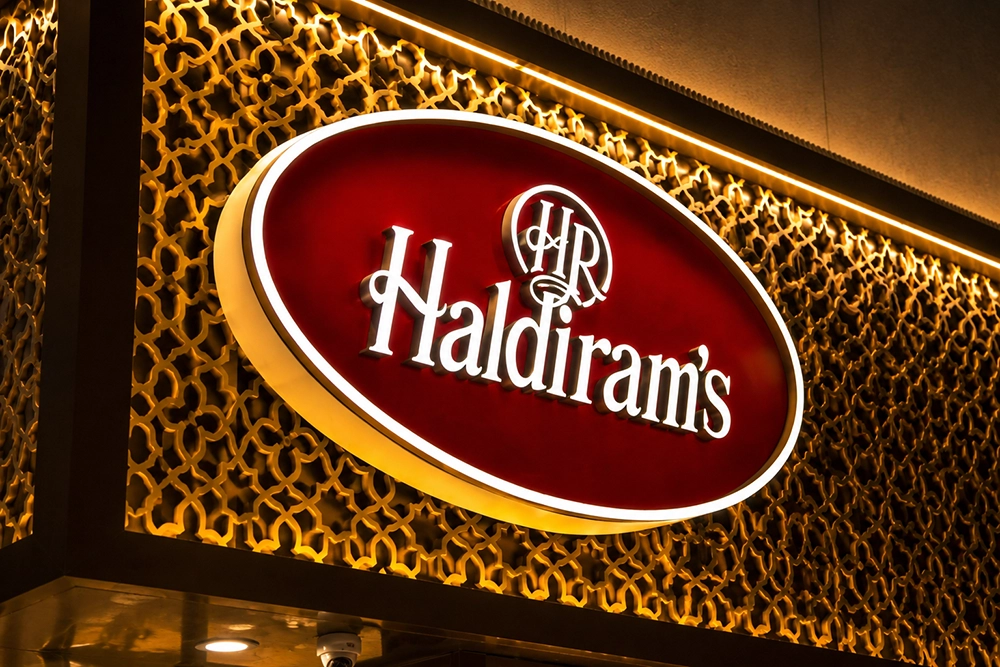
Lighting changes how signage performs after dark and how a brand feels. Face-lit letters create direct brightness and strong recognition, while halo-lit letters produce a softer architectural glow. The right choice depends on viewing distance, background, brand style and site conditions.
How face-lit signage works
LED modules illuminate through a translucent letter face, usually acrylic. This makes the logo or lettering itself bright and readable.
Face-lit signs work well for retail, restaurants and locations where recognition from a distance is important. Correct LED spacing and internal depth help prevent visible hot spots.
How halo-lit signage works
LEDs project light from the back of the letter onto the mounting surface. The reflected light creates a halo around an opaque letter face.
Halo lighting suits hotels, corporate environments and premium architectural applications. It needs suitable stand-off distance and a reasonably even background to form a clean glow.
Compare visibility and brand character
Face lighting is more direct and can remain legible in visually busy surroundings. Halo lighting is subtler and often feels more integrated with the architecture.
Some signs combine both techniques. Dual-lit letters can provide a bright face and a separate halo, but require careful colour and electrical coordination.
Check the wall, wiring and maintenance access
Dark, textured or reflective walls change the way a halo appears. Cable routes, power-supply locations, drainage and service access should be resolved before fabrication.
Brightness should suit the location rather than simply being maximised. Excessive output can reduce legibility, create glare and conflict with the surrounding environment.